Isengard
Isengard, the fortress of Saruman the White, stands as one of the most formidable and symbolically charged locations in the War of the Ring. Originally a green and fair stronghold of the Men of Númenor, it was transformed by Saruman into a dark industrial complex of pits, forges, and armories, from which he waged war against Rohan and conspired with Mordor. Its ruin at the hands of the Ents marks a decisive turning point in the war, a moment when the ancient powers of the natural world rose against the mechanized evil of the Wizard's Vale.
Origins and Architecture
Isengard was a ring of sheer rock, a great circular wall like a towering cliff, enclosing a valley. Within this ring stood Orthanc, a tower of black, gleaming stone, riven from the bones of the earth, with four mighty piers that opened into gaping horns near the summit. Orthanc was not made by Saruman but by the Men of Númenor long ago, and it was tall and full of secrets, a place of great power and majesty. The only entrance was a great arch in the southern wall, through a long tunnel closed at either end with mighty doors of iron. Once inside, one beheld a plain, a great circle somewhat hollowed like a vast shallow bowl, a mile from rim to rim. In Saruman's latter days, no green thing grew there. The roads were paved with stone-flags, and beside their borders marched long lines of pillars joined by heavy chains. Many houses, chambers, halls, and passages were cut and tunnelled back into the walls, and the plain itself was bored and delved with shafts leading to caverns far under, where Saruman had treasuries, store-houses, armouries, smithies, and great furnaces. Iron wheels revolved endlessly, and hammers thudded. At night, plumes of vapour steamed from the vents, lit from beneath with red, blue, or venomous green light.
Saruman's Dominion and the War with Rohan
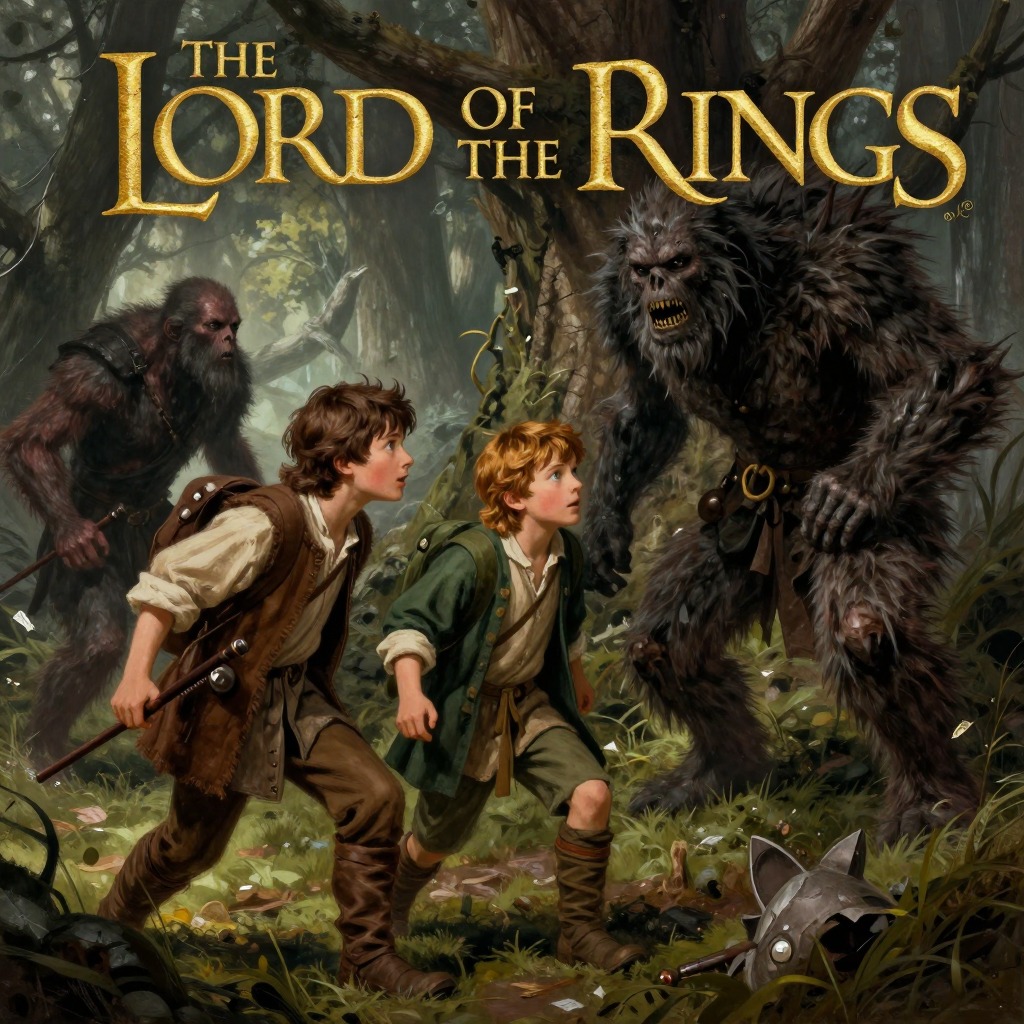
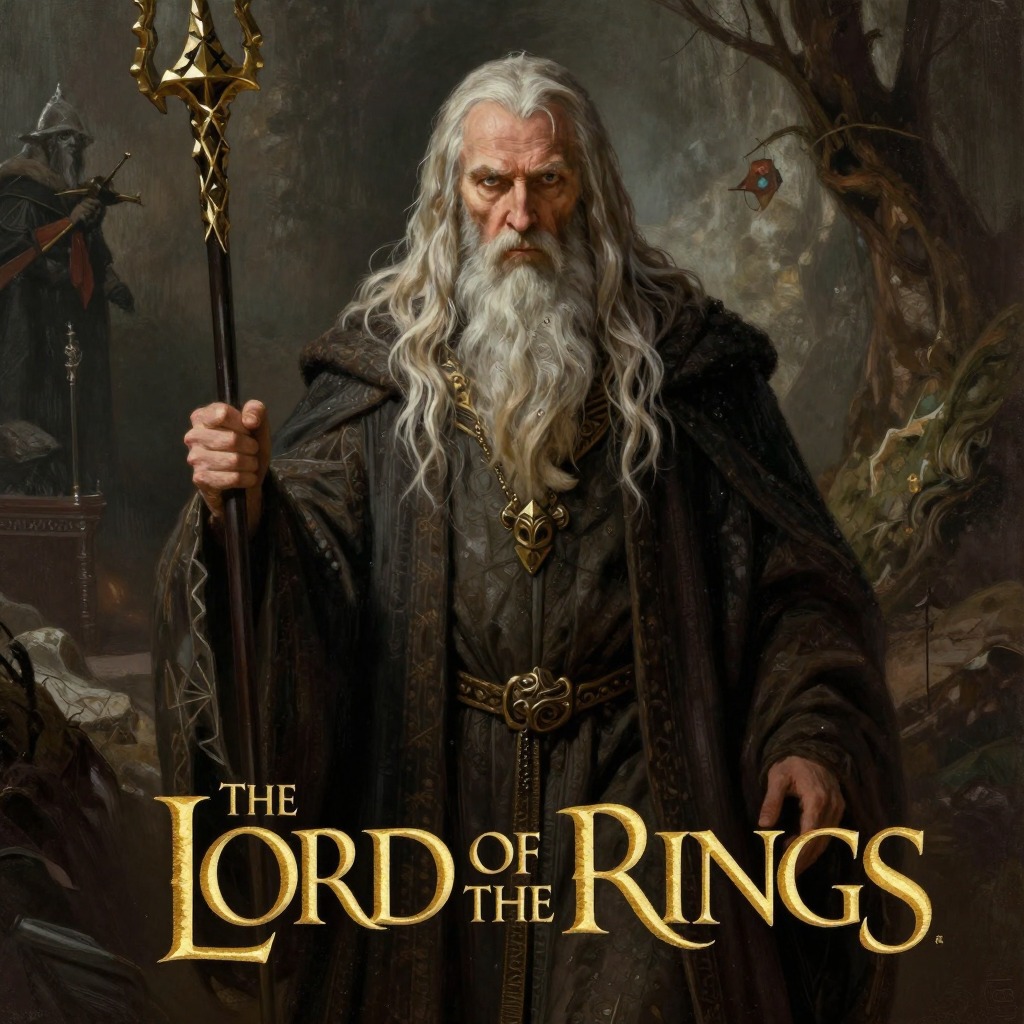
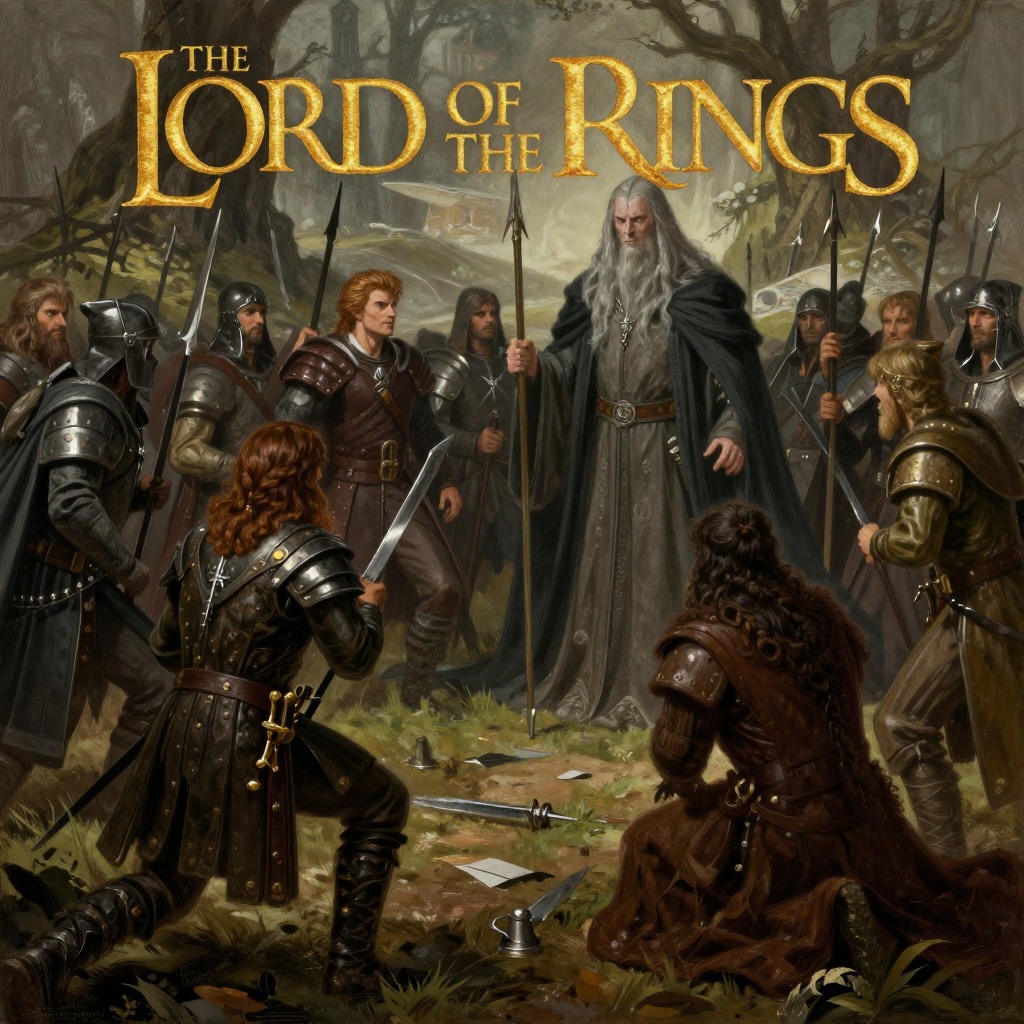
Saruman had long studied the arts of the Enemy himself, and he slowly shaped Isengard to his shifting purposes, making it better, as he thought, being deceived—for all those arts and subtle devices came but from Mordor. He took Orcs into his service, and Wolf-riders, and evil Men, and he closed the Gap of Rohan against the Rohirrim. From Isengard, he sent forth the Uruk-hai, a breed of great, swart, slant-eyed Orcs who could endure the sun, to capture the hobbits Merry and Pippin and to wage war on Rohan. The fortress became a place of guarded strength and fear, as though to rival the Barad-dûr itself. Saruman's voice, a weapon of enchantment, held the power to persuade and daunt, and from Orthanc he used the palantír to communicate with Sauron, a link that ultimately ensnared him.
The Ents' Wrath and the Drowning of Isengard
The Ents, ancient shepherds of the trees, had long suffered Saruman's axes. When Treebeard learned of the treachery and the wanton destruction of the forest, he roused the Ents to war. They marched on Isengard and, with a fury that shattered stone, tore down the great gates, broke the walls, and diverted the river Isen, flooding the entire ring. The waters poured in, quenching the fires and filling the caves, until Isengard became a steaming lake, with only the dark, unbroken tower of Orthanc standing above the flood. The Ents' work was complete: Saruman's power was broken, his armies scattered, and he himself was confined to Orthanc, a prisoner in his own tower.
Aftermath and Legacy
After the War of the Ring, the Ents remade the valley into a garden, the Treegarth of Orthanc, filled with orchards and trees, with a clear lake in the midst. The tower of Orthanc remained, tall and impregnable, its black rock mirrored in the pool. Aragorn, as King Elessar, gave the valley to the Ents to do with as they would, on condition that they keep watch over Orthanc and see that none entered without his leave. The keys were given to Quickbeam. Isengard, once a symbol of corrupted power and industrial might, was thus returned to nature, a lasting monument to the victory of the free peoples and the folly of Saruman.